
 KOR
 ENG
 JPN
 RUS
 VNM
 CHN
 TWN
Anti-Aging Lifting: At What Age Should You Start?
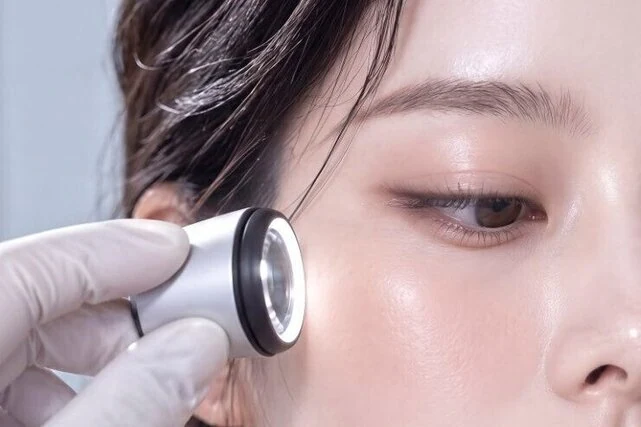
Anti-Aging Lifting: At What Age Should You Start?
Yuno Plastic Surgery Magazine · Medically reviewed
Key points of this article
- When to consider lifting is best judged by your current condition — reduced skin elasticity, the degree of sagging and changes in facial volume — rather than a set age.
- Facial changes tend to differ by age group, but even at the same age, the treatment needed and its timing can differ depending on skin thickness, amount of fat, weight changes and lifestyle.
- Energy-based treatments such as ultrasound and radiofrequency, thread lifting and facelifts differ in how they work, the tissue they target and the recovery period, so they are chosen to match your current sagging and volume.
- With lifting, the standard is not having more of it or having it more often, but planning a method, intensity and interval suited to your current face and the purpose of treatment.
Anti-aging lifting is not something you must start at a specific age. The timing is decided by looking at whether reduced skin elasticity, sagging of the jawline and cheeks, and changes in facial volume have actually appeared, along with the degree of improvement you want and how much recovery time you can take.
There comes a moment when you look in the mirror and feel your jawline has become less defined and your nasolabial folds seem deeper than before.
"At what age do people get lifting?"
"I'm only in my 30s — isn't it too early?"
"If I'm in my late 40s, is it already too late?"
To get to the point: rather than there being a right answer for "from what age," it is better to decide when to start based on what changes have appeared in your skin and facial tissue now.
Even at the same age, the speed of aging differs greatly depending on skin thickness, the amount of facial fat and lifestyle.
So while you can refer to changes that commonly appear in each age group, you need a separate assessment of the method and timing that suit your face.
What is anti-aging lifting?
Anti-aging lifting is a general term for non-surgical treatments and surgical methods performed to improve reduced skin elasticity and sagging of facial tissue caused by aging.
Facial aging is a process in which changes in several structures — the skin, subcutaneous fat, the SMAS (superficial musculoaponeurotic system) and the retaining ligaments — appear together.
As reduced skin elasticity, changes in the position and amount of fat, and changes in the support structures appear together, the contours of the jawline and cheeks can change.
Lifting methods are divided by which of these layers they act on and how deeply. So knowing which layer's change is the main cause in your face is the starting point for choosing a method.
At what age should you start anti-aging lifting?
When to consider lifting is judged by your current condition — skin elasticity, the degree of sagging and changes in facial volume — rather than age itself. Changes by age group can be a reference, but individual differences are large.
The table below is reference information summarizing examples of changes that may appear in each age group and the directions of care that can be considered. The actual choice of treatment can differ depending on the condition of your face.
Facial changes by age group and lifting approaches to consider
| Age group | Common changes | Methods mainly considered |
|---|---|---|
| 20s | Sagging is often minimal, and care for skin texture and elasticity may be the focus | Sun protection, moisturizing and lifestyle care come first |
| 30s | Elasticity begins to decline, the skin feels thinner, early nasolabial folds | Depending on skin condition, energy-based treatments such as ultrasound or radiofrequency may be considered |
| 40s | The jawline becomes less defined, the cheeks descend and the nasolabial folds deepen | Depending on the degree of sagging, energy-based treatments, thread lifting or surgical methods may be considered |
| 50s and older | Sagging progresses to under the jaw and the neck, and the skin becomes loose | Depending on the extent of sagging and skin condition, surgical methods may be considered as well |
Even within the same age group, the method needed can differ depending on skin thickness, amount of fat and weight changes. In some cases relatively light care is enough, and in others more active treatment is needed.
What matters more than age when deciding when to start lifting?
When to start lifting and which method to use are decided by looking at skin thickness, the degree of sagging, volume changes and the recovery period you can manage, all together.
Skin thickness and elasticity
Thin skin that loses elasticity quickly tends to show fine lines and sagging early. Conversely, thicker skin keeps its elasticity relatively longer but tends to sag because of its weight.
Is it sagging or volume loss?
The method differs depending on whether the face looks older because tissue has descended (sagging) or because fat has decreased and the face has hollowed (volume loss). If only a tightening treatment is done on a face that lacks volume, it can look even more gaunt.
Change when lifted by hand
How much the contour changes when you lift the skin with your hands can be a reference during consultation, but it is hard to judge the cause of sagging or the appropriate treatment from this alone. The skin, fat, support structures and volume must be evaluated together.
Lifestyle and weight changes
If you have a lot of UV exposure, smoke, or have lost a lot of weight in a short time, sagging can appear earlier than in others of the same age.
The recovery period you want
Whether you need to return to daily life right away or can take a few weeks to recover is also an important standard. The degree of change you can expect and the recovery period differ by method, so your schedule must be considered as well.
How do lifting methods differ?
Lifting methods can broadly be divided into energy-based treatments, thread lifting and surgical lifting, and they differ in the depth they act on, pain, recovery period and the conditions they suit.
Comparison of how lifting methods work and recovery
| Method | How it works | Anesthesia and pain | Recovery | When to consider |
|---|---|---|---|---|
| Ultrasound lifting (HIFU) | Delivers focused ultrasound energy to a specific depth to create thermal coagulation points and induce tissue remodeling | Anesthesia and pain can differ depending on the device and area | Daily life is usually possible the same day | Early stage when elasticity starts to decline |
| Radiofrequency (RF) lifting | Delivers heat to tissue with radiofrequency energy to induce collagen contraction and remodeling | Heat or pain may be felt depending on the device and intensity | Daily life is usually possible the same day | Skin texture, fine lines and overall elasticity care |
| Thread lifting | Lifts sagging tissue with dissolvable threads | Local anesthesia; a tight feeling after the procedure | A few days to 1–2 weeks of swelling and tightness | Mild to moderate sagging |
| Mini facelift / Full facelift | Depending on the extent of surgery, sagging tissue such as the skin and SMAS is released, repositioned and fixed | Can differ depending on the extent of surgery and the clinic's anesthesia plan | Several weeks of swelling and recovery | Clear sagging that is hard to address with non-surgical treatments |
Energy-based treatments and thread lifting work in different ways, so they can be planned alone or in combination based on your current skin elasticity, where the sagging is and the amount of fat.
Does the timing of starting lifting affect how natural the result looks?
As sagging increases, the range of treatments that can be considered may change. However, starting early does not always guarantee a more natural result, and choosing a method suited to your current condition is what matters.
When sagging is significant, a larger correction may be needed, and the change you can expect and the recovery process may also differ.
If the loss of elasticity is at a relatively early stage, non-surgical care may be considered first depending on your condition, but whether treatment is needed and at what intensity requires individual evaluation.
However, starting early does not stop aging. It is best to understand lifting not as treatment that stops aging, but as a way to improve or manage the loss of elasticity and sagging that have appeared now.
How long do lifting effects last, and when should you have it again?
How long lifting effects last depends on the method and device, the treatment intensity, your skin condition and the speed of aging. Non-surgical treatments and surgical lifting differ in how their effects appear and how long they last, so it is hard to set a uniform period.
Energy-based treatments
Collagen regeneration happens gradually, so the effect appears over several weeks and then decreases after a certain period. So the interval is often set as part of regular care.
Thread lifting
The threads break down over time, and the effect of the treatment also changes over time. How long it lasts can differ depending on the type of thread, the insertion method, the tissue condition and the degree of sagging.
Surgical lifting
Because the SMAS layer is pulled and fixed directly, it tends to last longer than non-surgical treatments. However, aging of the skin and tissue continues even after surgery.
Rather than a fixed interval, it is best to decide when to repeat treatment by looking at how the current effect has changed, your skin condition, and the intensity of and response to the previous treatment.
What are common misconceptions about lifting?
The ideas that lifting is something you get when you are older, that more frequent treatment is better, and that it always hurts are all only half true.
"Lifting is for when you're older"
It is used not only to improve sagging that has become clear, but also for care when elasticity starts to decline. The standard is not the age you start, but what your skin needs now.
"The more often and the stronger, the better the effect"
Depending on the type of device, the intensity and the area treated, energy-based treatments can affect surrounding tissue, including the fat layer. Especially when facial volume is low, it is important to plan the treatment area and intensity carefully.
"All lifting hurts"
Pain differs greatly depending on the method and area. Some treatments feel like warmth, while others require anesthesia. If you are worried about pain, check the anesthesia method during consultation.
"If you keep repeating treatments, you'll never need surgery"
When sagging is significant, it may be hard to get the expected change with non-surgical treatments alone. In such cases, several options, including surgical methods, can be compared together.
FAQ | Frequently asked questions about when to start lifting
Can I have a lifting treatment in my 20s?
Being in your 20s does not mean a lifting treatment is definitely necessary or unnecessary. It is best to check whether there is actual sagging, reduced skin elasticity or changes in facial volume, and consult about a method suited to your condition only when needed.
Does starting lifting early make the skin sag faster?
It is hard to say the skin sags faster just because you started lifting early. However, tissue responses can differ depending on the type of energy, the intensity and the area treated, so a treatment plan suited to your current face is important.
Can I return to daily life right after a lifting treatment?
The recovery period differs depending on the type and intensity of treatment and your individual response. Some energy-based treatments allow a quick return to daily life, but redness, swelling or tenderness can occur, and thread lifting and surgical lifting may require a longer recovery period.
Which is better, ultrasound lifting or thread lifting?
Ultrasound lifting and thread lifting work differently, so it is hard to say one is always better. After checking skin elasticity, the location and degree of sagging and the amount of facial fat, they can be planned alone or in combination.
How long do lifting effects last?
How long lifting effects last depends on the type of treatment, the device, the intensity, your skin condition and the speed of aging. Non-surgical treatments and surgical lifting last in different ways, so it is hard to explain with a uniform period.
Are there side effects to lifting treatments?
Depending on the lifting method, swelling, bruising, pain, changes in sensation, burns, asymmetry or thread-related problems may occur. If symptoms are severe or persistent, or if there are abnormal symptoms such as skin color changes or severe pain, it is good to have it checked by your medical team.
If you are wondering when to start lifting, it is best to look first at the changes that have appeared on your face now rather than at your age.
The method and timing that suit you differ depending on whether elasticity is just starting to decline, tissue has visibly descended, or volume has decreased.
With lifting, starting early or having it often is not the goal in itself; choosing the method and intensity your current skin and facial tissue need matters more.
If it is hard to decide which method suits you, rather than deciding alone, it is good to check your current skin and facial tissue with your medical team.
※ Notice
- All surgeries and procedures may involve side effects or complications such as swelling, bruising, bleeding, infection, scarring, asymmetry and the possibility of revision surgery.
- This content is intended to provide medical information and is not a specific person's treatment experience (review).
- The exact diagnosis and treatment method should always be decided through consultation with a medical professional.
Yuno Plastic Surgery
This content has been reviewed by our medical team.